AC Leaking Water? 3 Common Causes and When to Call a Pro

Living in Southwest Florida means your air conditioner isn't just a machine: it’s a survival tool. Between the scorching afternoon sun and the thick, heavy humidity that feels like a wet blanket, our AC units work harder than almost anywhere else in the country.
But when you walk by your indoor unit and notice a puddle on the floor, or worse, see water dripping through your ceiling, that survival tool suddenly feels like a liability.
An ac leaking water isn't just a minor annoyance. If you're a homeowner in Fort Myers, a landlord managing a rental property, or a senior looking to keep your home safe, water damage is a high-stakes enemy. In our climate, standing water leads to mold in a heartbeat.
Why is your AC leaking? Let’s break down the three most common culprits and how the unique Florida environment plays a starring role in your cooling drama.
The Florida Humidity Factor
Before we dive into the "why," we have to talk about how your AC actually works. Most people think an AC just "makes cold air." In reality, it’s a giant dehumidifier.
As the warm, humid Florida air passes over the cold evaporator coils, the moisture in the air condenses into liquid water: just like the "sweat" on a cold glass of iced tea. In Southwest Florida, where humidity levels regularly hit 90%, your AC pulls gallons of water out of the air every single day.
Normally, this water drips into a pan and flows out of your house through a small PVC pipe. But when that system breaks down, that water has nowhere to go but your floor.

1. The Clogged Condensate Drain Line
This is the undisputed heavyweight champion of AC issues in Florida. If you are searching for ac repair near me because of a leak, there is a 90% chance this is your problem.
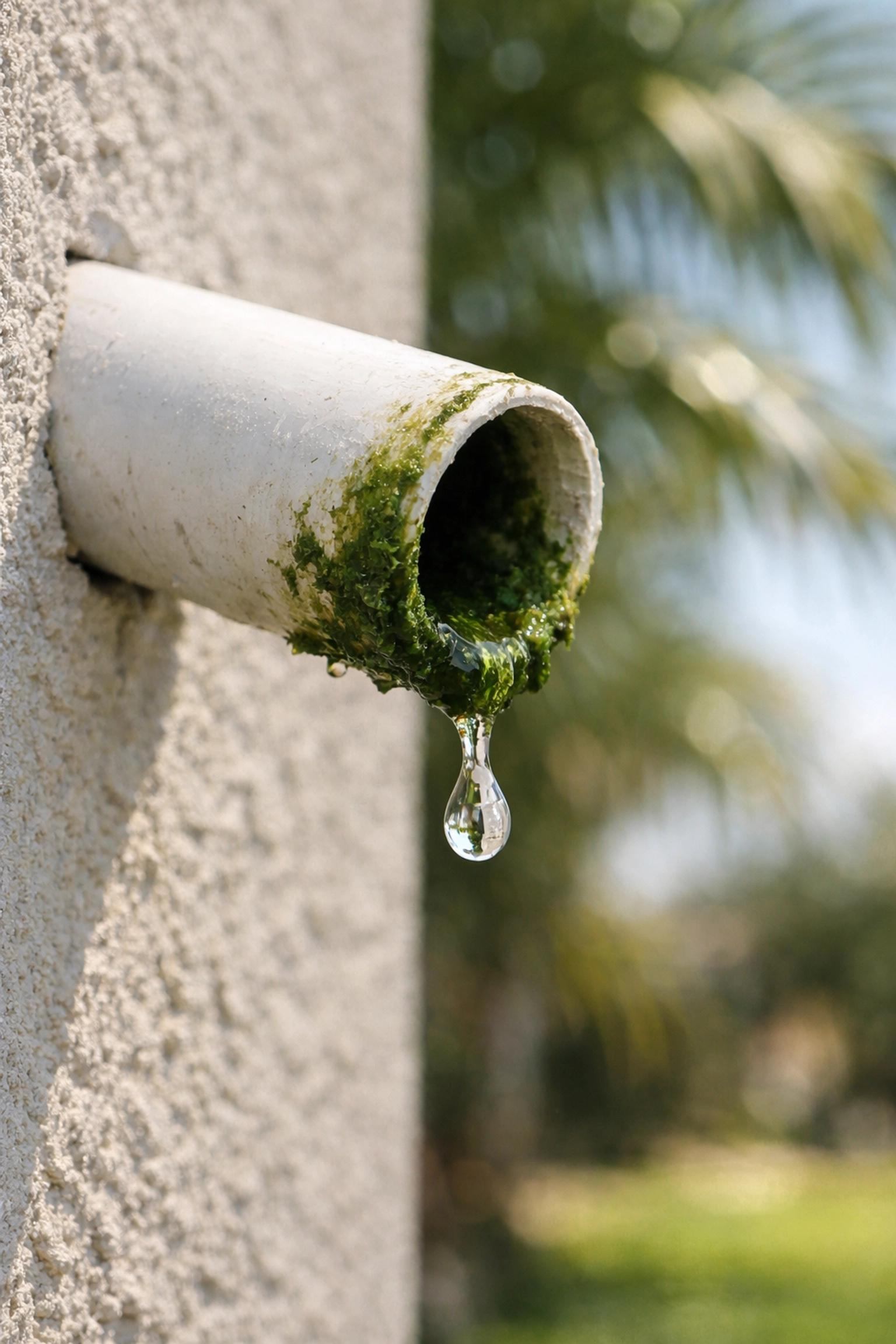
Because our air is so warm and moist, the inside of your drain line becomes a playground for "muck." We’re talking about algae, mold, and fungi. Over time, this biological gunk builds up until it forms a thick, jelly-like plug.
What Happens Next?
When the plug forms, the water backing up from the coil has nowhere to go. It fills the internal drain pan and eventually overflows. If you have a safety "float switch" installed, it should shut your system off to prevent a flood. If you don't have one, or if it fails, the water will simply spill over the sides of the unit.
The DIY Fix
If you’re handy, you can often clear a minor clog with a wet/dry shop vacuum. Go to the PVC pipe outside your house (usually near the condenser unit), put the vacuum hose over the end of the pipe, and use a wet rag to create a seal. Let it run for a minute to suck out the algae and standing water.
However, if the clog is deep in the "P-trap" or if the "muck" has hardened, you’ll need a pro with a CO2 flush kit to clear it out safely.
2. The Cracked or Rusted Drain Pan
If you have an older AC unit, your drain pan might literally be falling apart.
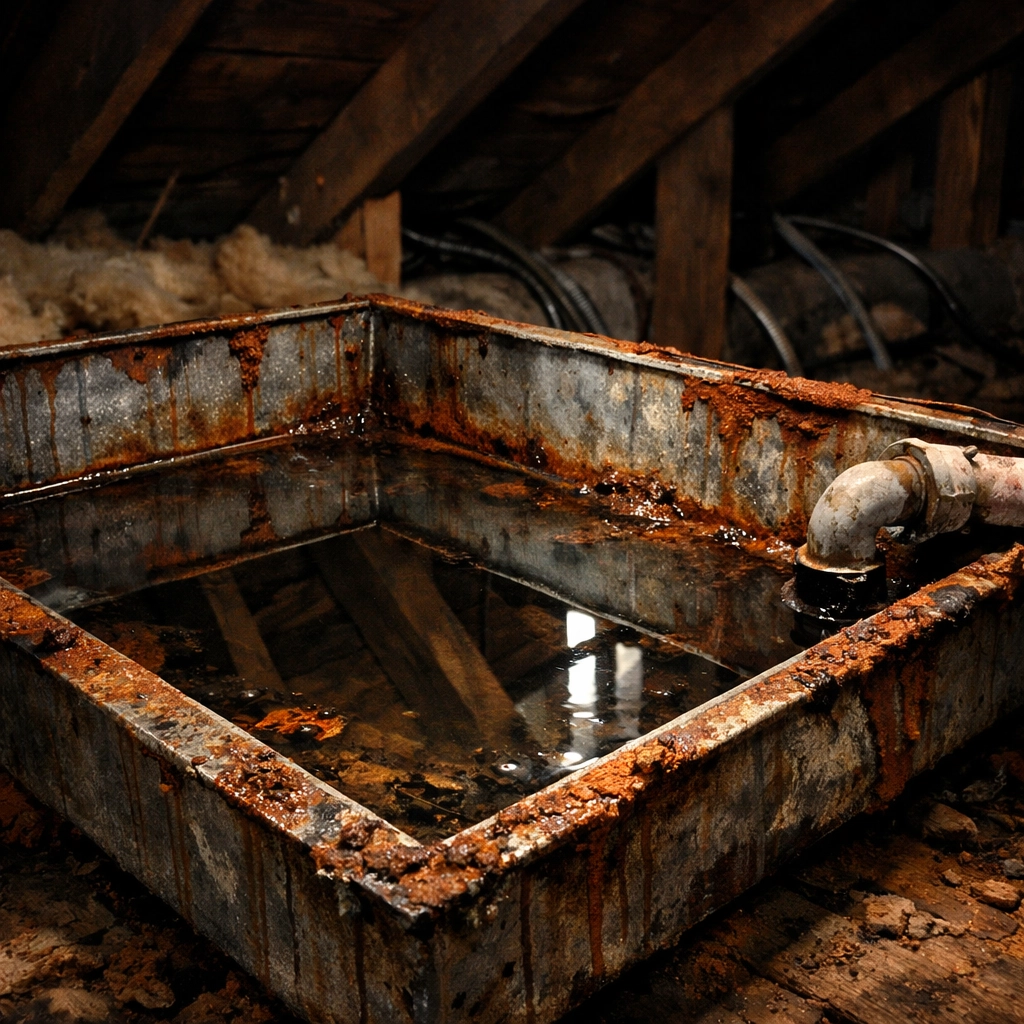
Older units often used galvanized steel pans. Over years of sitting in water, these pans rust. Small pinholes develop, and suddenly, you have a slow, steady drip that can ruin your drywall or subflooring before you even notice it.
Why It Happens in Florida
The constant cycle of moisture in our region means these pans never really get a chance to dry out. Even modern plastic pans can crack if the unit was installed poorly or if the house has settled, putting stress on the plastic.
How to Spot It
Grab a flashlight and look under your indoor evaporator coil. If you see standing water in the secondary pan (the big one the unit sits in) or if you see rusted metal flakes, the pan is likely the culprit. For landlords, this is a major liability. A rusted pan can cause thousands of dollars in structural damage if it's hidden in a closet or attic.
3. The Dirty Air Filter and Frozen Coils
It sounds counterintuitive. How does an AC freezing up lead to water leaking on the floor?
It all starts with airflow. Your AC needs a steady stream of warm air to keep the refrigerant inside the coils at the right temperature. If your air filter is clogged with dust, pet hair, and Florida dander, that airflow is cut off.
Without warm air to "bathe" the coils, the temperature drops below freezing. The condensation on the coils turns to ice.
The Meltdown
Eventually, the ice block gets so thick that the AC can’t breathe at all, and you’ll notice the house getting warmer. When you finally turn the unit off (or it fails), that massive block of ice begins to melt.
A drain pan is designed to handle drips, not a sudden flood from a melting glacier. The water overwhelms the system and ends up on your floor.
The Simple Solution
Check your filter! We recommend homeowners in our area change their filters every 30 days. If you have pets or allergies, don't wait. It’s the cheapest ac maintenance you can perform, and it prevents the most expensive repairs.
When to Call a Pro
While changing a filter is easy, some leaks are signs of deeper trouble. You should call for professional assistance if:
The leak is constant: If water is flowing even when the unit is off, you might have a plumbing issue or a major backup.
You see ice: If there is visible ice on the copper lines or the indoor coil, don't just keep running it. You likely have a refrigerant leak or a failing blower motor.
The "smell" appears: If your home starts smelling like "dirty socks," you probably have mold growth inside the unit due to standing water.
The unit won't turn on: This often means your safety switch has tripped because of a clog.
At FL Stanley Cooling, LLC, we see these issues every single day. We know how the local water and heat impact your specific brand of air conditioner.

Prevention: The Best Defense
You shouldn't have to wait for a puddle to appear to think about your AC. Regular ac maintenance is the only way to catch these problems before they become emergencies.
During a standard maintenance visit, a technician will:
Flush the drain line: Using specialized tools to ensure the "muck" is gone.
Inspect the pan: Looking for those tiny rust holes or cracks.
Check refrigerant levels: Ensuring your coils won't freeze up in the middle of a July heatwave.
Clean the coils: Removing the dust that blocks airflow and causes leaks.
For seniors and landlords, a maintenance plan is a lifesaver. It provides peace of mind that the system is running efficiently and, more importantly, that the floors are staying dry.
Final Thoughts
An ac leaking water is your system’s way of screaming for help. In Southwest Florida, ignoring that scream is a recipe for expensive mold remediation and structural repairs.
Check your filters, keep an eye on your drain line, and don't hesitate to call in the experts if things look damp. A little bit of attention today prevents a major headache tomorrow.
Need a hand getting your system back in tip-top shape? Visit us at FL Stanley Cooling, LLC to schedule a check-up. We keep it simple, we keep it honest, and we keep you cool.


Comments